bumpstuff.com – Every enduring card game has a moment when it stops being “something a few people play” and becomes a shared language. Texas Hold’em did that without changing its core mechanics—two private cards, five shared cards, and decisions that arrive in waves. The interesting part is how a regional game, played under different names and in different rooms, ended up becoming the default version of modern Hold’em.
Ask ten people about the origin of Texas Hold’em and you’ll get confident answers that don’t quite match. That’s because the game’s early history is part documentation, part tradition, and part storytelling—like many folk-born games that spread long before anyone bothered to archive them.
A Texas birthplace that’s official—and still debated
The cleanest “official” claim is this: the Texas Legislature formally recognized Robstown, Texas, as the birthplace of Texas Hold’em. That recognition appears in a 2007 Texas House Concurrent Resolution (HCR 109).
But “official recognition” isn’t the same as airtight historical proof. Encyclopaedia Britannica notes that the Robstown origin story is widely repeated and was formalized by that 2007 resolution, while also pointing out that the underlying evidence is thin and that other origin claims exist.
So the honest version is:
-
Robstown is the officially recognized birthplace in Texas law.
-
The deeper origin story remains debated, with alternative theories still circulating.
That tension—between tradition and documentation—is part of what makes Hold’em’s early story feel so “American”: a practical game first, a recorded history later.
Before it was “Texas Hold’em,” it was simply “Hold’em”
One detail that matters: people didn’t always call it “Texas Hold’em.” In many accounts, it was just “hold’em” while it spread across Texas. Wikipedia’s history section reflects this idea and frames the naming as something that solidified as the game moved beyond Texas and into larger card scenes.
Names usually harden when outsiders need labels. When a game stays local, everyone knows what you mean. When it travels, it needs a passport.
The Vegas turning point: when a regional game meets a bigger stage
Where Hold’em’s history becomes more traceable is its move into Las Vegas. A commonly cited account is that Corky McCorquodale introduced Texas hold’em to Las Vegas in 1963, at the California Club.
Once a game lands in a hub where players mix, compare, and repeat what works, it changes status. Wikipedia describes Hold’em spreading from that initial foothold to other venues such as the Golden Nugget, Stardust, and Dunes.
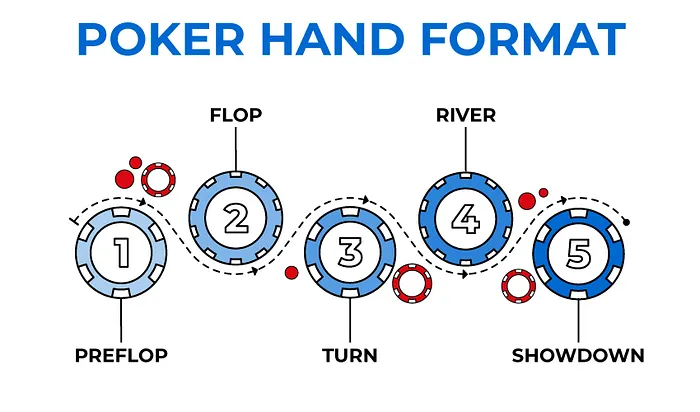
This is also where Hold’em’s identity sharpened: multiple betting rounds, community cards that build drama, and a structure that rewards attention. Even if you strip away money talk completely, it’s easy to see why the format sticks—each street (flop/turn/river) forces you to update your thinking instead of locking into one plan.
The 1967 “Texas crew” and the version people recognize today
Another frequently repeated milestone is 1967, when well-known Texas players were playing Hold’em regularly in Las Vegas. Wikipedia lists names commonly associated with that period, including Crandell Addington, Doyle Brunson, and Amarillo Slim.
One technical footnote from that era is also famous: accounts suggest that “ace high” became part of the standard form around this time, shifting away from earlier forms where aces could be treated differently. Wikipedia summarizes that change as part of the game’s Vegas-era evolution.
This matters because it hints at what “origin” really means for many games: not a single invention day, but a gradual settling of rules into the version that becomes widely recognizable.
The tournament era: why the world learned the game
If Texas gave Hold’em its early identity, tournaments gave it a megaphone.
The World Series of Poker (WSOP) begins in 1970, hosted at Binion’s Horseshoe, and over time No-Limit Texas Hold’em becomes the centerpiece most people associate with modern competitive play.
This is where “Texas Hold’em History” becomes less local folklore and more public record: recurring events, named winners, and a format repeated year after year until it becomes the reference point.
Even if you never watch a tournament, this period shaped how the game is taught. It standardized terminology, popularized the hand-reading mindset, and made “community-card poker” feel like the natural modern form.
Why Hold’em spread so well (even outside competitive play)
Some games are elegant but fragile—one rule disagreement and the table stalls. Hold’em is resilient. It survives casual settings because the structure is clear, and it survives serious settings because the decision depth is real.
A few design reasons it travels well:
-
Shared board cards keep everyone engaged (you’re always watching the same story unfold).
-
Multiple decision points mean the game doesn’t hinge on one draw.
-
Simple core rules let beginners sit in quickly, then improve by experience.
That’s also why the game adapts smoothly to learning environments—home tables, clubs, and online practice rooms where people play for points or just for the puzzle.
A small detail most beginners miss about its “origin story”
When people say “Hold’em came from Texas,” they often imagine a single inventor and a single moment. But most evidence points to something more realistic: a rule-set that evolved socially—refined by repeated play, carried by traveling players, and finally stabilized when it hit larger, more interconnected card scenes. Britannica’s framing—official recognition alongside uncertainty—captures that nuance well.
In other words: Hold’em’s origin isn’t just where it started, but where it settled into the version the world now shares.
The origin of Texas Hold’em sits at the intersection of tradition and record: a Texas-rooted game officially linked to Robstown, then sharpened and amplified through Las Vegas and the tournament era that turned it global.
If you want the most practical takeaway from Texas Hold’em History, it’s this: the game didn’t win because it was mysterious—it won because its structure made people think, talk, and return to the table.
